
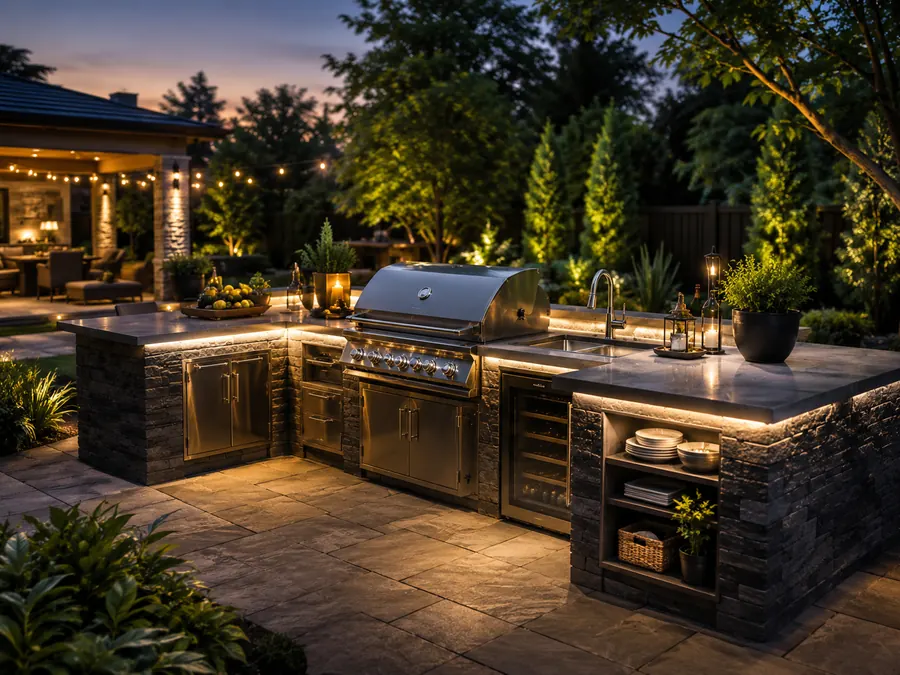
An outdoor kitchen can completely change the way you use your backyard. Instead of cooking inside while guests gather outside, you can prepare food, serve drinks, grill, and enjoy the atmosphere all in one place. A well-designed outdoor kitchen makes summer evenings easier, weekend hosting more enjoyable, and everyday meals feel more special. It turns the patio into a true extension of the home.
The best outdoor kitchens are not built around one appliance alone. They combine cooking, preparation, storage, lighting, seating, safety, and comfort. Whether you are planning a compact grill station or a full luxury backyard kitchen, choosing the right features helps the space work smoothly. The goal is to create an outdoor cooking area that looks polished and feels practical every time you use it.
Start with the right grill
The grill is usually the center of an outdoor kitchen. It should match the way you cook and the number of people you commonly serve. A small household may only need a quality built-in grill with enough room for weeknight dinners, while frequent hosts may prefer a larger unit with multiple burners, warming racks, and precise temperature control.
Stainless steel is popular because it looks professional and handles outdoor conditions well. Look for sturdy construction, reliable ignition, easy-to-clean grates, and enough cooking surface for your needs. If you love variety, consider whether side burners, griddles, rotisserie attachments, or smoker boxes make sense. The right grill should make cooking easier, not more complicated.
Add generous counter space
Counter space is one of the most important outdoor kitchen features, yet it is often underestimated. You need room to set down plates, season food, prepare ingredients, hold serving trays, and keep tools within reach. Without enough counter space, outdoor cooking becomes awkward and messy.
Place counter space on both sides of the grill if possible. This creates a practical workflow: one side for raw ingredients and preparation, and the other side for finished food and serving. Durable surfaces such as stone, granite, concrete, or quality outdoor-rated materials work best. Choose a surface that resists heat, moisture, and stains while matching the style of your patio.
Include weather-resistant storage
Outdoor storage saves time and keeps the kitchen looking organized. Cabinets, drawers, and shelves can hold utensils, grill tools, cleaning supplies, cutting boards, towels, serving pieces, and outdoor-safe dinnerware. When storage is built into the kitchen, you do not have to carry everything back and forth from the house.
Use materials designed for outdoor environments. Stainless steel doors, sealed cabinetry, stone structures, and weather-resistant drawers are better choices than indoor materials that can warp or rust. Keep storage logical. Grill tools should be near the grill, dishes should be near the serving area, and cleaning items should be close to the sink or trash station.
Consider a sink for convenience
A sink is not required for every outdoor kitchen, but it can be one of the most useful upgrades. It allows you to rinse produce, wash hands, clean tools, and manage spills without running inside. If you entertain often, a sink helps keep the outdoor cooking process smooth.
Before adding a sink, confirm plumbing requirements and local guidelines. You may need proper drainage and winterization depending on your climate. A simple cold-water sink can be enough for many homeowners, while a more advanced setup may include hot water. Place the sink near prep space so it supports the natural cooking flow.
Use refrigeration wisely
An outdoor refrigerator or beverage cooler adds convenience, especially during summer. It keeps drinks cold, holds condiments, and reduces trips inside. For people who host frequently, a beverage cooler can prevent the indoor kitchen from becoming crowded and helps guests serve themselves more easily.
Choose appliances rated for outdoor use. Indoor refrigerators are not designed for outdoor temperature changes and moisture. Place the cooler in a shaded or protected part of the island when possible. If you do not need full refrigeration, an insulated drawer, ice bin, or cooler station may still provide practical benefits.
Plan comfortable seating
An outdoor kitchen works best when people can gather nearby. Seating transforms the grill area from a cooking station into a social space. Bar stools at an island, a dining table under a pergola, or lounge seating near the kitchen all help create a welcoming environment.
Keep seating close enough for conversation but not so close that guests crowd the cook. Consider wind direction, heat from the grill, and safe walking paths. If you add island seating, leave enough overhang and legroom for comfort. For a complete backyard experience, connect the kitchen to a dining area and a lounge area so guests can move naturally.
Add shade and shelter
Cooking outdoors is much more enjoyable when the area is protected from harsh sun. A pergola, pavilion, roof extension, or shade sail can make the kitchen usable for longer periods during the day. Shade also protects countertops, appliances, and seating from excessive heat.
When adding overhead cover, plan carefully around the grill. Heat, smoke, and ventilation must be considered. Some grills require specific clearances from combustible materials. A professional layout helps ensure the kitchen is safe and comfortable. A partially covered design often works well because it gives shelter while allowing smoke and heat to escape.
Layer the lighting
Lighting is essential for both safety and atmosphere. A grill needs task lighting so you can see food clearly after sunset. Counters need soft but useful illumination for preparation and serving. Pathways, steps, and seating areas benefit from low lighting that guides movement and creates comfort.
Use a mix of overhead lights, under-counter lighting, wall sconces, landscape lights, and string lights. Warm light usually feels best in outdoor entertaining spaces. Avoid placing bright lights directly in guests’ eyes. Good lighting makes the kitchen feel premium and encourages people to stay outside later into the evening.
Choose durable flooring
The surface beneath an outdoor kitchen must handle foot traffic, spills, grease, weather, and heat. Pavers, natural stone, porcelain tile, and concrete are common choices. Avoid slick surfaces around cooking areas, especially near sinks or pools. Safety and maintenance are just as important as appearance.
A stable, level patio makes appliances easier to install and furniture more comfortable. If the kitchen is part of a larger backyard remodel, plan the flooring before placing the island. The patio should connect smoothly to the house, dining area, and lounge space. Strong flooring gives the entire outdoor kitchen a more finished feel.
Think about privacy and wind
Outdoor kitchens are more comfortable when they are protected from strong wind and direct views. Privacy screens, hedges, fences, pergola curtains, and raised planters can make the space feel more intimate. Wind control is especially important around grills, candles, napkins, and lightweight serving items.
Observe the yard before building. Notice where breezes come from and where neighbors can see in. A few strategic landscaping elements can improve comfort without making the space feel closed off. The goal is a backyard kitchen that feels open, relaxed, and private enough for easy hosting.
Include easy cleanup features
Summer cooking should not end with a frustrating cleanup process. Trash storage, recycling bins, paper towel holders, cleaning supplies, and easy-to-wipe surfaces all make a difference. If everything needed for cleanup is close by, the outdoor kitchen stays cleaner and more enjoyable.
Consider where grease, food scraps, packaging, and dishes will go during a busy meal. A hidden trash pullout, cabinet for supplies, and nearby sink can make cleanup simple. Choose materials that do not stain easily and seal surfaces when recommended. A beautiful kitchen should also be easy to maintain.
Style the kitchen to match your backyard
An outdoor kitchen should feel connected to the rest of the home. Match colors, materials, and proportions with your patio, pergola, furniture, and landscape. Stone bases create a sturdy, timeless feel. Dark metal details feel modern. Wood accents add warmth. Greenery softens hard surfaces and helps the kitchen blend into the yard.
Small styling touches also matter. Potted herbs, lanterns, serving trays, outdoor rugs, and comfortable dining furniture can make the space feel inviting. Keep décor practical and weather-friendly. The best outdoor kitchens look refined while remaining easy to use.
Plan for serving and traffic flow
A great outdoor kitchen should make serving easy. Think about where food will come off the grill, where guests will fill plates, and where drinks will be placed. If everyone has to stand directly in front of the cook, the space can become crowded quickly. A separate serving counter, side table, or dining area close to the kitchen helps the meal move naturally.
Traffic flow is especially important when children, pets, or multiple guests are outside. Keep walkways open between the house, grill, dining table, and lounge seating. Avoid placing stools or chairs where people need to pass with hot plates. The more intuitive the layout feels, the more comfortable the kitchen will be during real gatherings.
Store fuel and accessories safely
Outdoor cooking often involves propane, charcoal, pellets, wood chips, lighters, cleaning brushes, and other accessories. These items need safe, organized storage. Fuel should be kept according to manufacturer guidance and local safety recommendations. Heat-sensitive items should not be stored too close to the grill. A dedicated cabinet or storage zone keeps the kitchen tidy and reduces risk.
It is also helpful to keep backup essentials nearby, such as extra grill tools, foil, gloves, cleaning cloths, and serving utensils. When supplies are organized, cooking feels relaxed. You can focus on the food and your guests instead of searching through indoor drawers while the grill is hot.
Make comfort part of the design
People remember how a space feels. Shade, seating, airflow, lighting, and nearby surfaces all affect comfort. A summer kitchen should provide relief from sun, enough room to move, and places for guests to sit without feeling separated from the cook. A fan under a covered area, tall planters for privacy, or a pergola with climbing greenery can make a noticeable difference.
Comfort also includes the cook’s experience. Place tools within reach, keep prep space close to the grill, and make sure the ground surface is stable. If the person cooking enjoys using the space, the outdoor kitchen will be used far more often. Design for real comfort, not only for appearance.
Final thoughts
An outdoor kitchen is one of the most exciting backyard upgrades because it combines function, style, and social connection. Start with a reliable grill, then add counter space, storage, lighting, seating, and shelter based on your lifestyle. Choose durable materials and plan the layout around real cooking habits. With the right must-haves in place, your outdoor kitchen can become the favorite gathering spot of the summer and a lasting feature of your home.
Leave a Reply